Helpful Hints
- Septic tanks should be pumped every 2 to 3 years and cottage septic tanks every 5 years
- When purchasing a new home it is ideal to have a Septic Inspection done at the time of pumping
- Use phosphate-free soaps and detergents
- Use vinegar to clean the toilet, hydrogen peroxide as a bleach alternative, and use 1-ply toilet paper
- Use low-flow shower heads and toilets
- Don't direct excess water into your septic
- Backwash water softener and sump pump discharge should all go into leaching pits
- Keep the leaching bed area grassed and free of trees, vehicles, asphalt, brick, patio stones, automatic lawn sprinklers, swimming pools, and regular foot traffic
Understanding Your Home's Septic System is a booklet of information provided by the Ontario Ministry of Environment which contains information about how a septic system works and how to maintain the system. The booklet is available at  www.omafra.gov.on.ca/english/environment/facts/sep_smart.htm
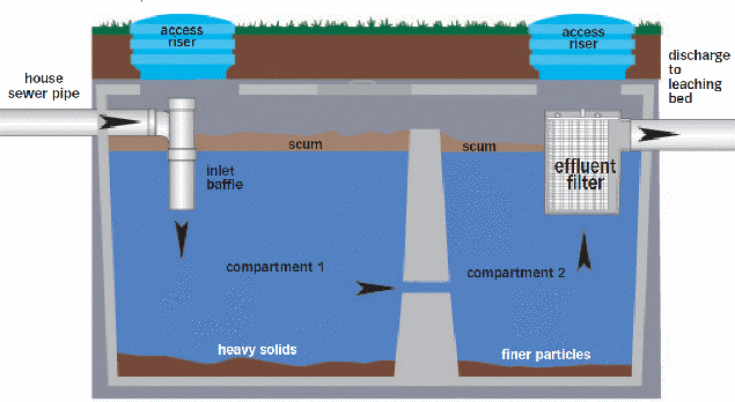
Below is a diagram of a septic system. The septic has two compartments: one for solids where the inlet baffle is and the second compartment for liquids where the outlet baffle leads to the leaching bed. The first compartment holds heavy solids while the second compartment holds finer sediment. The effluent filter located in the outlet baffle prevents solids flowing into the leaching bed. The leaching bed will then siphon the liquid before it returns to the soil.